
About me · Feetbuster
Agnieszka Szewczyk
Podology is my passion. Writing and singing are equally close to my heart.
I run the Feetbuster foot care practice in Kraków. In my work, I value talking with patients and understanding the problems they are seeking help with.

My journey
Podology driven by a passion for helping
My interest in medical subjects and my desire to help others made podology my passion. I value an individual approach: listening carefully, learning about each patient’s needs and understanding the problem they are seeking help with.
Knowledge and development
My education and experience include cosmetology and podology. I regularly expand my knowledge through training.
I am a podiatry student at Andrzej Frycz Modrzewski Krakow University. I am developing my professional career in podiatry and am also actively involved in the Polish Podiatric Society (Polskie Towarzystwo Podiatryczne), where I serve as Coordinator for the Małopolska Voivodeship.
In my work, I focus on continuous professional development, expanding my knowledge and raising standards of foot health care.
At the practice
At the practice, we pay attention to hygiene and instrument sterility. We explain the treatment and the care to continue at home.
You can come with a skin or nail problem, or simply ask how to look after your feet.
Beyond podology
My other passion is words and music — I write and sing.
Photographs
From my practice and my story
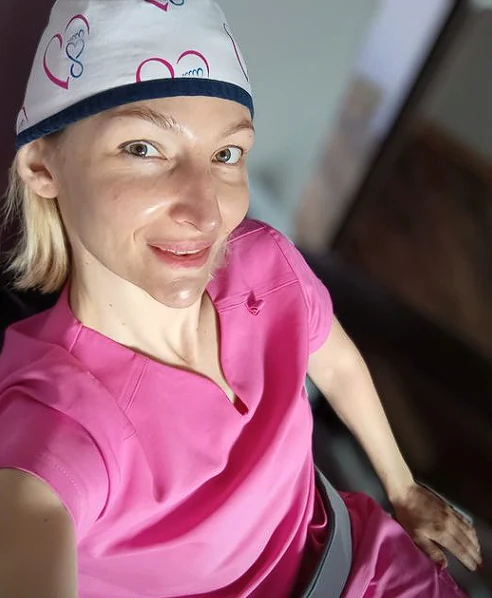
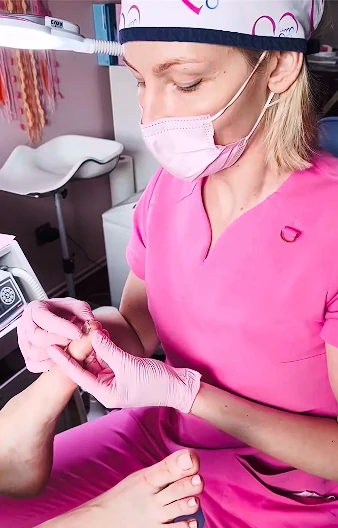
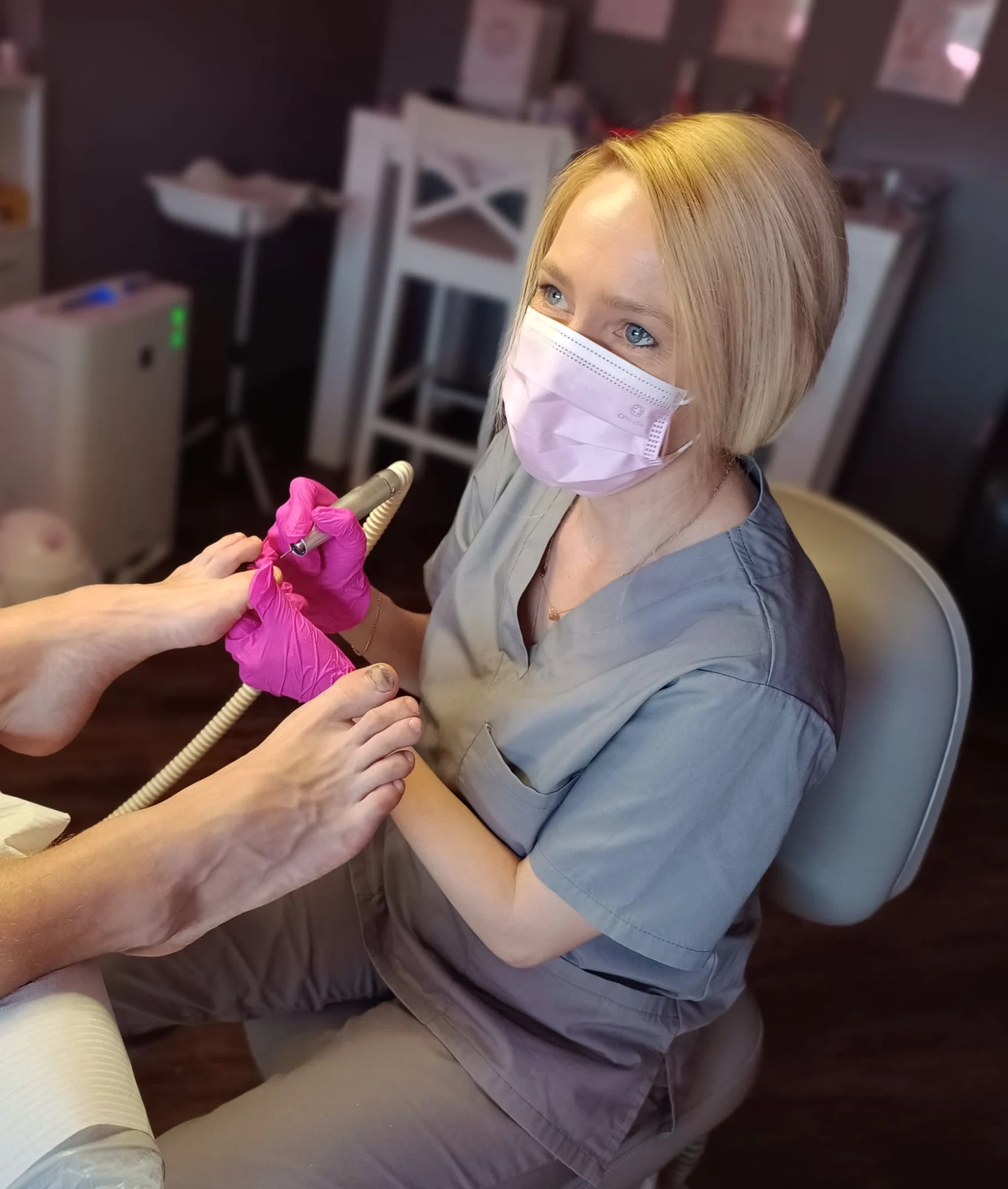
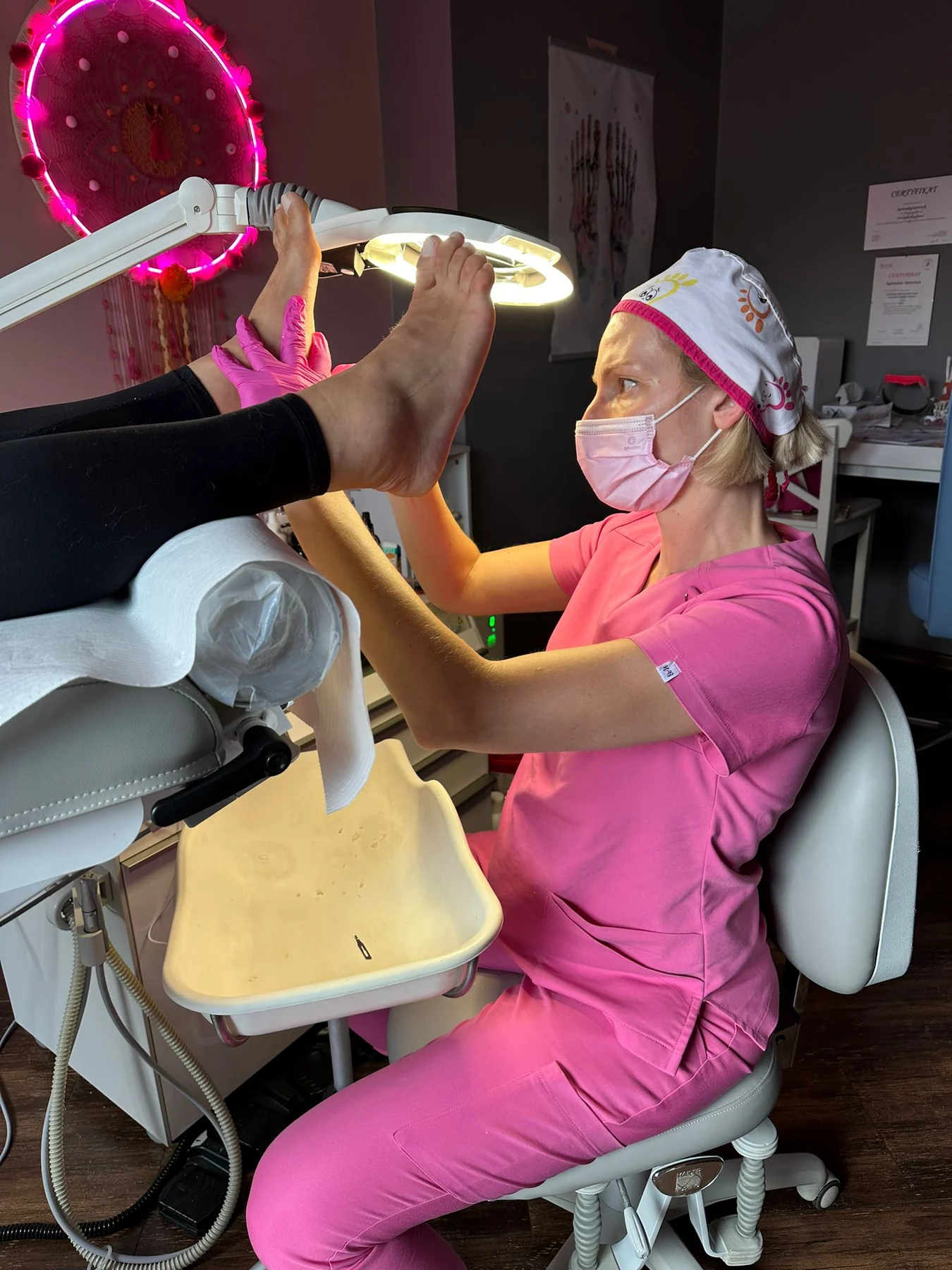
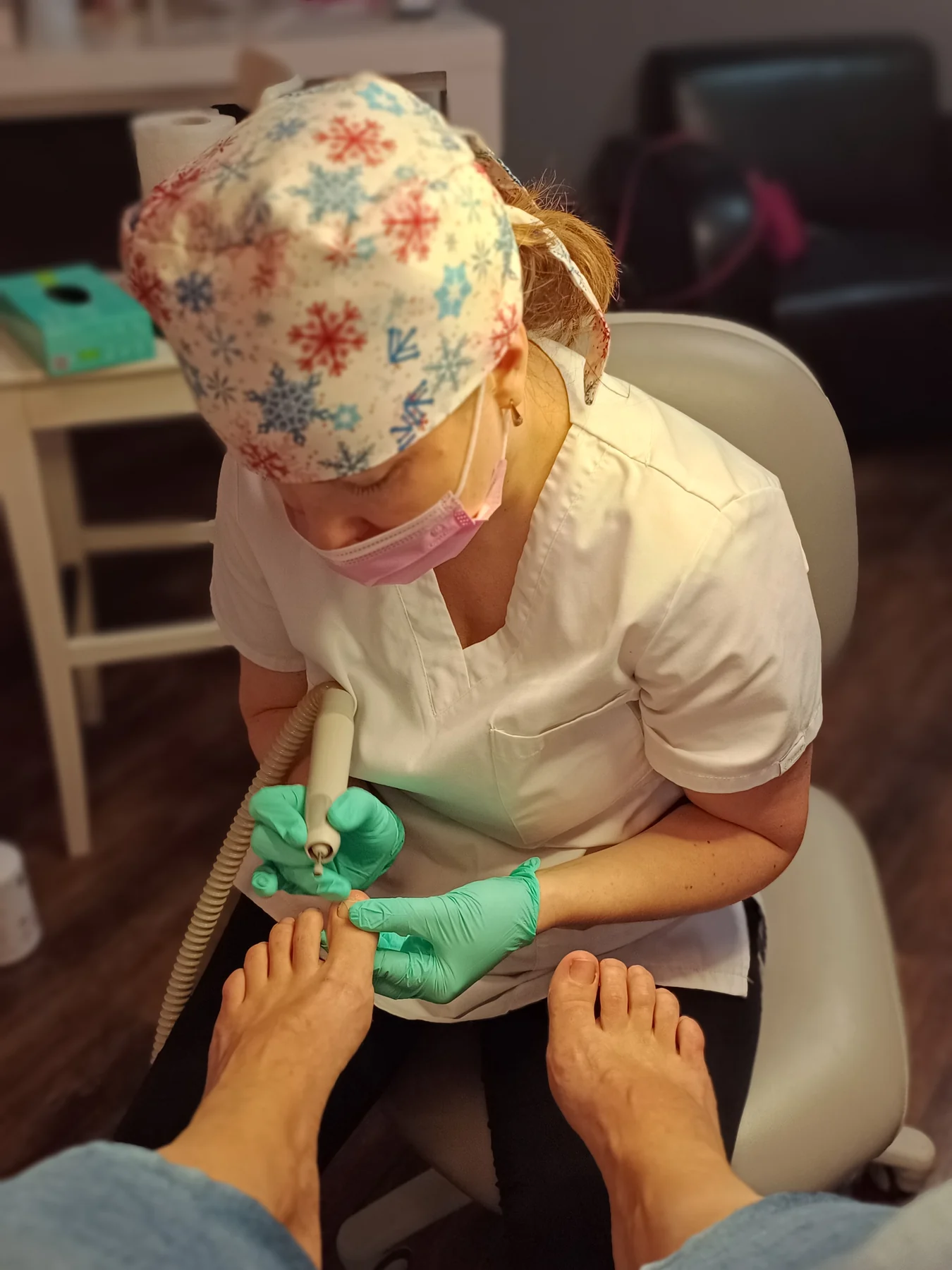
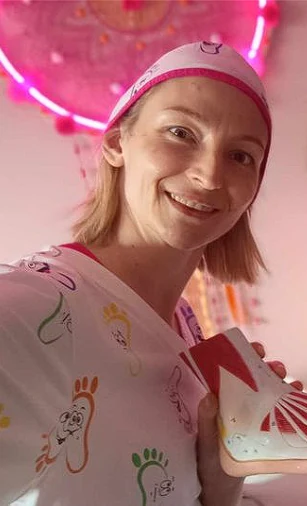
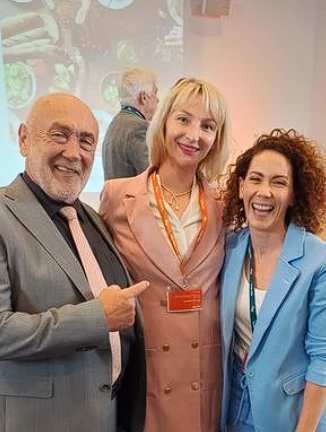
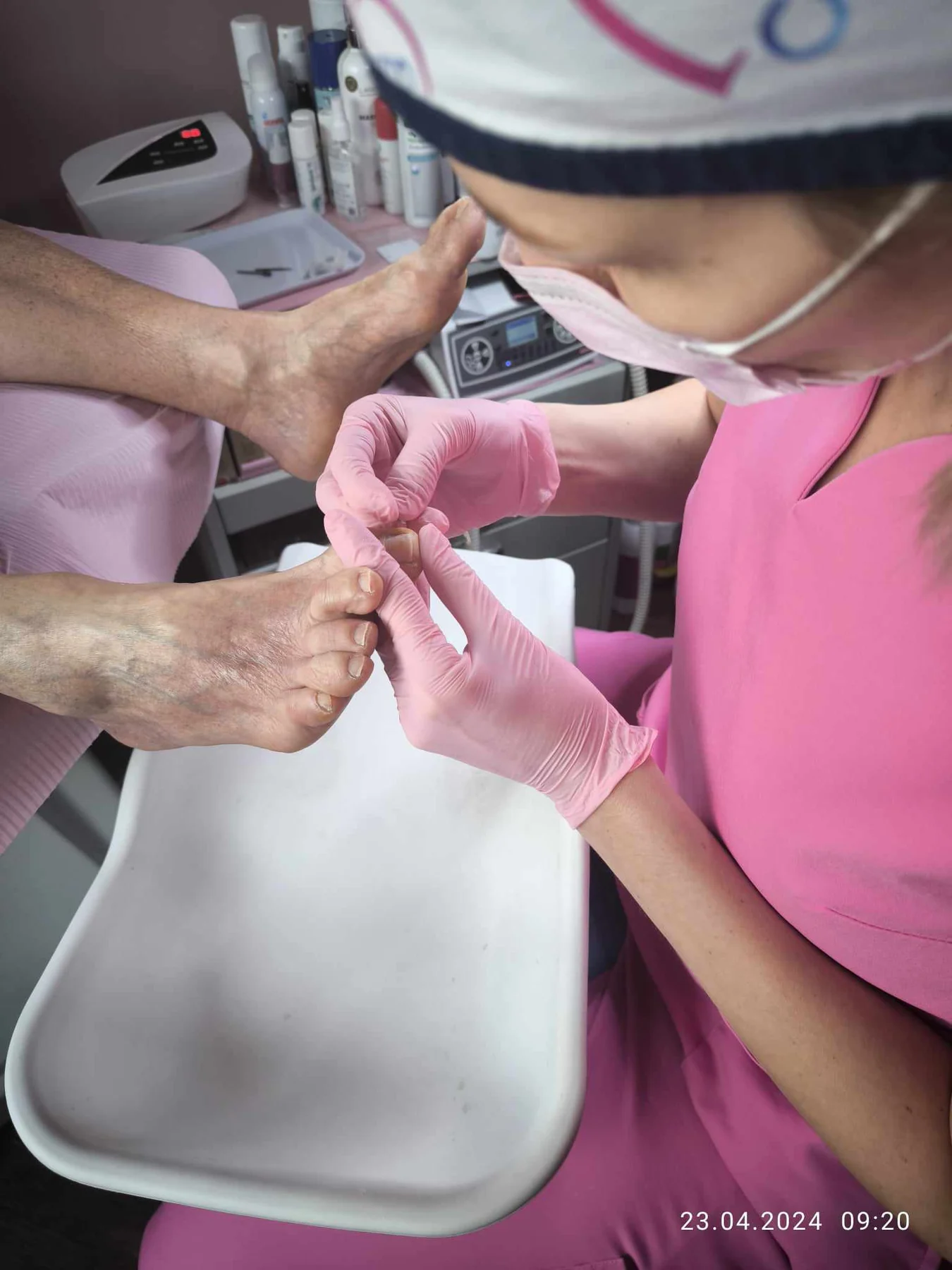
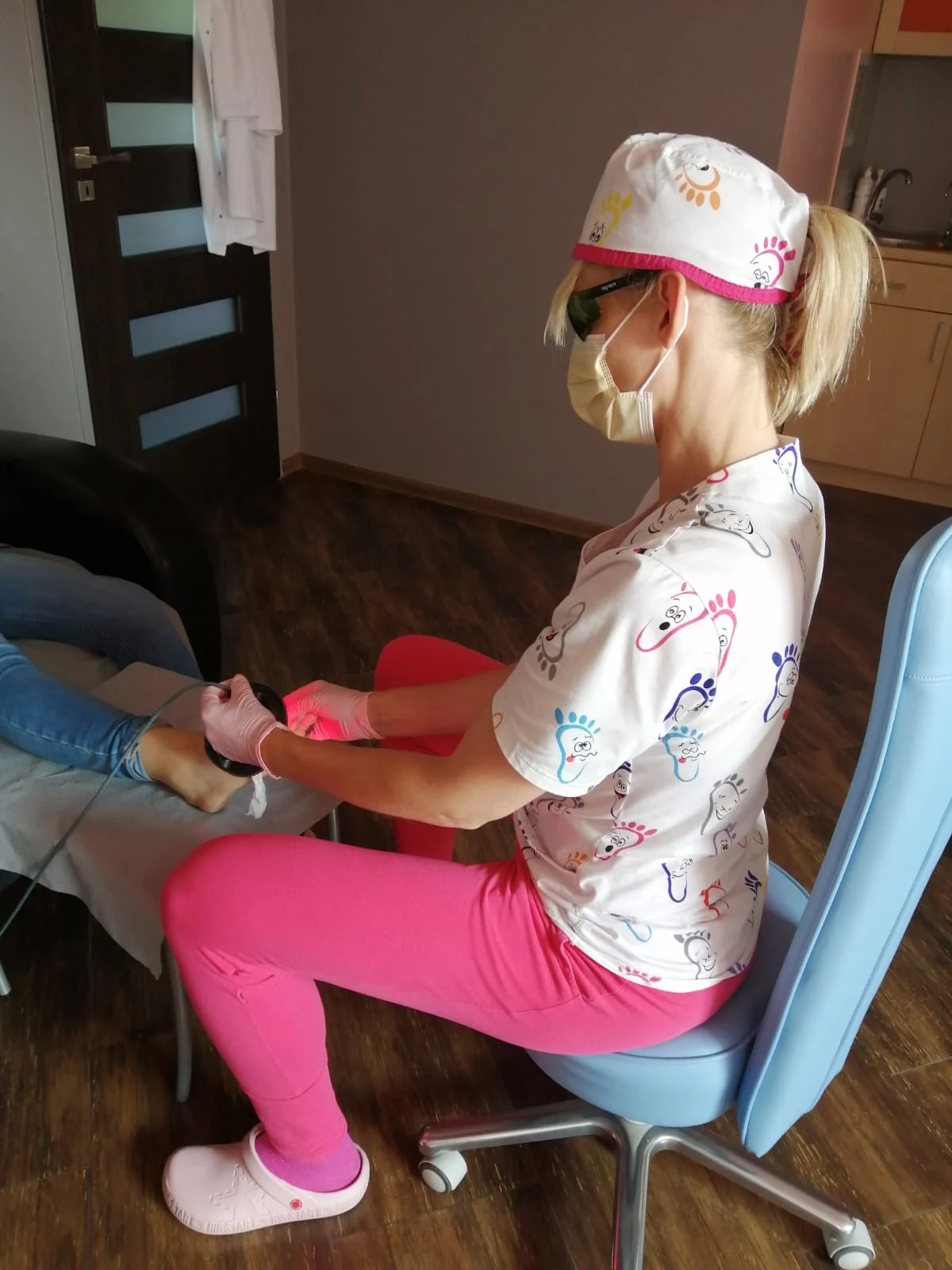
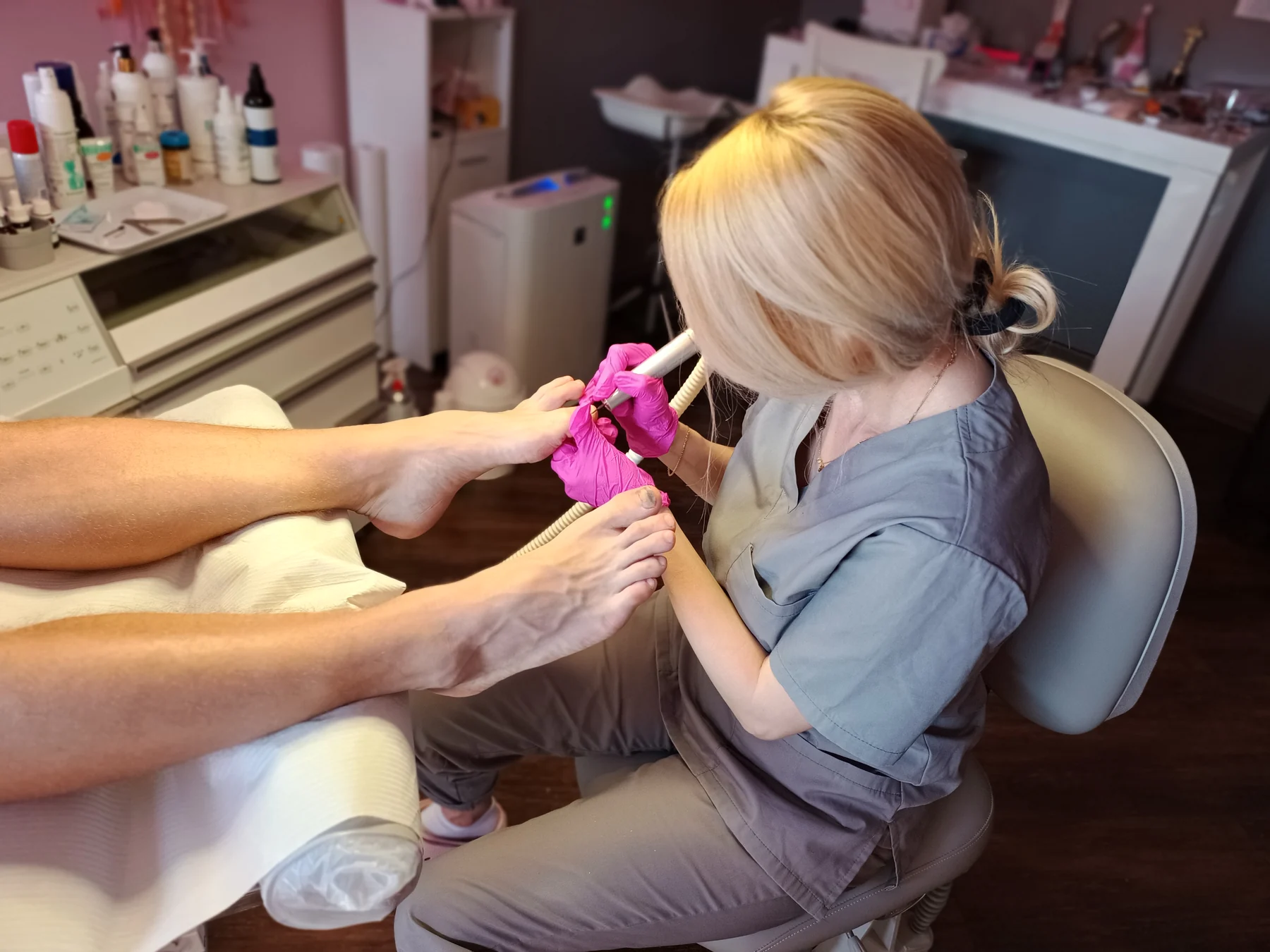
Work at the practice and meetings. Select a photograph to enlarge it.

Show more photos
Publications
Sharing my experience
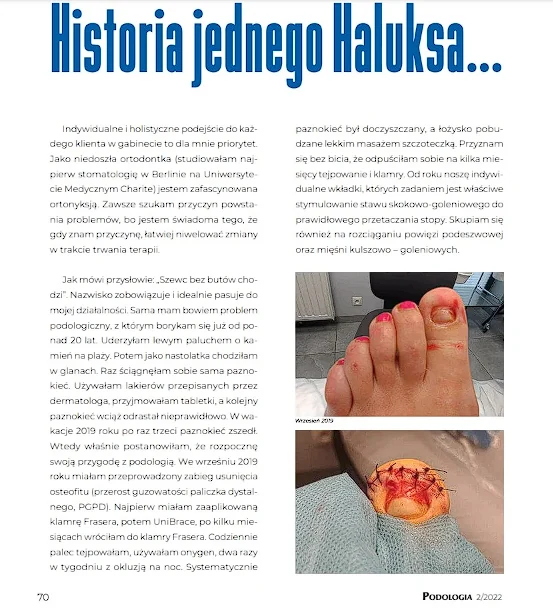
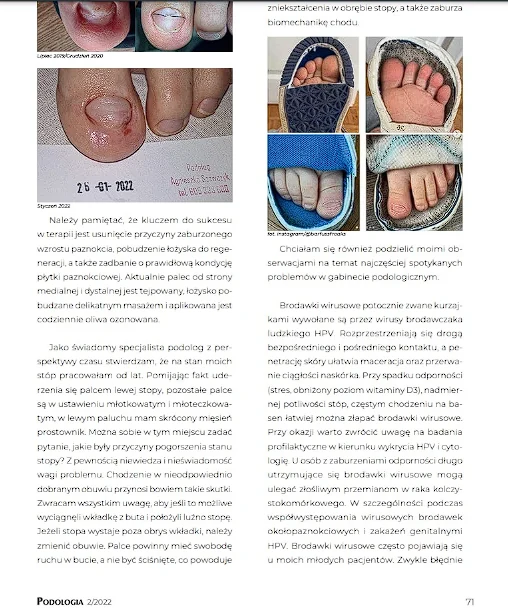
“The Story of One Big Toe…”
An article I wrote for Podologia magazine, issue 2/2022.
Scans of the original Polish article are shown below. Click a page to enlarge it.

Read the English translation of the article
The Story of One Big Toe… — English translation
By Agnieszka Szewczyk, Podologia 2/2022, pp. 70–72. An edited translation of the main text follows. The original scans above also contain photographs and an author biography in Polish. This is the author’s personal account as published in 2022, rather than an individual treatment plan.
An individual, holistic approach to every client in my practice is a priority for me. As someone who once hoped to become an orthodontist — I initially studied dentistry at Charité in Berlin — I am fascinated by nail bracing. I always look for the causes of problems, because I know that understanding the cause makes it easier to address the changes during treatment.
As the Polish saying goes, “The cobbler goes barefoot.” My surname, Szewczyk, echoes the Polish word for a cobbler: it is a name to live up to and fits my work perfectly. I have a foot problem myself that I have been dealing with for over 20 years. I hit my left big toe against a stone on a beach. Later, as a teenager, I wore heavy boots. Once, I removed the nail myself. I used nail lacquers prescribed by a dermatologist and took tablets, but the next nail still grew back incorrectly. In the summer of 2019, the nail came off for the third time. That was when I decided to begin my journey into podology. In September 2019, I underwent surgery to remove an osteophyte — an overgrowth of the distal phalanx tuberosity. I first had a Fraser brace fitted, then a UniBrace, and after a few months returned to the Fraser brace. I taped the toe every day and used Onygen; twice a week I applied it under an occlusive dressing overnight. The nail was regularly cleaned, and the nail bed stimulated with gentle brush massage. I admit that I stopped taping and using braces for several months. For the past year, I have worn individual insoles intended to support correct ankle function and the foot’s roll-through movement. I also focus on stretching the plantar fascia and the hamstring muscles.
It is important to remember that the key to successful treatment is to remove the cause of disrupted nail growth, stimulate the nail bed to regenerate, and look after the nail plate’s condition. The toe is currently taped on its medial and distal sides; the nail bed is stimulated with gentle massage, and ozonated olive oil is applied daily.
Looking back with the knowledge I now have as a podology practitioner, I can see how my feet ended up in this condition over the years. Apart from the injury to a toe on my left foot, the other toes have hammer and mallet deformities, and I have a shortened extensor muscle in the left big toe. What caused the condition of my foot to deteriorate? Lack of knowledge and failure to appreciate the seriousness of the problem certainly played a part. Walking in ill-fitting footwear can have these consequences. I encourage everyone, where possible, to take the insole out of a shoe and place their foot on it. If the foot extends beyond its outline, the footwear should be changed. Toes should have room to move freely inside a shoe rather than being squeezed together, which causes deformity and disrupts the biomechanics of walking.
I would also like to share my observations about the problems most often encountered in a podology practice.
Viral warts, commonly called “kurzajki” in Polish, are caused by human papillomaviruses (HPV). They spread through direct and indirect contact. Maceration and breaks in the epidermis make it easier for the virus to enter the skin. Reduced immunity — associated with stress or low vitamin D3 levels — excessive sweating of the feet and frequent visits to swimming pools make it easier to acquire viral warts. In this context, it is also worth paying attention to preventive HPV testing and cervical cytology. In people with immune disorders, persistent viral warts can undergo malignant transformation into squamous cell carcinoma, particularly when periungual viral warts and genital HPV infections occur together. Viral warts often appear in my young patients.
Another issue I would like to draw attention to is strain caused by repeated small impacts inside a shoe. The big toes are most often affected. Compression of small blood vessels and poor blood supply to the tip of the toe are often causes of the nail plate separating from the nail bed, known as onycholysis. Runners are one example. For people who do not train regularly, even a hike, skiing, a visit to a climbing wall or wearing high heels and shoes with narrow toe boxes can be enough to cause an injury. Fungal nail infection is one condition that aggravates onycholysis. The nails become heavily thickened and crumbly and take on a yellow-brown colour.
To conclude, remember that it is always worth identifying the cause of a problem rather than treating only the symptoms. Taking a holistic approach increases the chances of effective treatment without recurrence.
The dated clinical photographs, portrait and author biography are preserved in the original publication scans.

In “City of Women”
Discover my story in the magazine “City of Women” ↗ (in Polish)
Discover the Feetbuster foot care practice
Appointments at the practice are currently with Małgorzata Sasak-Kuźma and Diana Kushch. Explore our services or choose a time in Saloner.