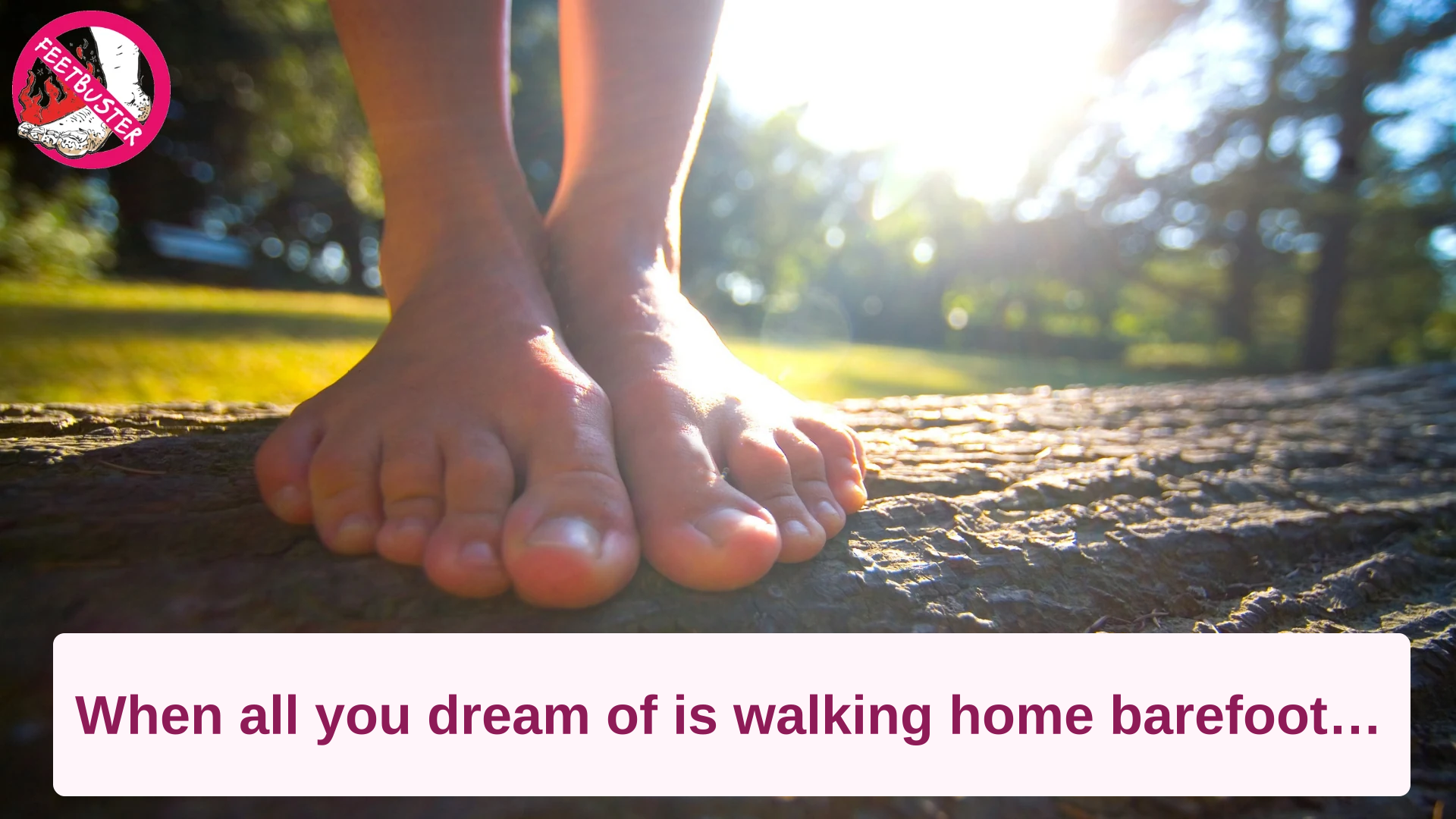
Who among us doesn’t know this? Quick shopping, beautiful new summer sandals, a big night out or a long-awaited walk around the Krakow Market Square and… after just 15 minutes you feel that characteristic, burning inferno. Each subsequent step becomes a fight for survival, and you only have one thought in your head: take off these shoes ASAP!
Summer chafing, abrasions and blisters are familiar problems when temperatures rise and we stop wearing socks. What should you do if a painful blister appears? How can you deal with it safely, and when is home care not enough?
Here is a quick podology first-aid guide from the team at FEETBUSTER!
🛑 To pop or not to pop? That is the question!
This is the most common dilemma. You see a large blister filled with serous fluid on your heel or toe and your first thought is: “I will grab a needle and get it over with”.
A podology practitioner’s advice: leave the needle alone! A blister is an ingenious natural dressing created by your body. The stretched skin and the fluid inside protect the deeper, living layers of the epidermis from bacteria and further pressure. If the blister is not very large and does not make walking difficult, leave it alone. The fluid will be reabsorbed naturally within a few days.
What if the blister has burst on its own? Okay, it happened. In such a situation, hygiene is the most important thing:
- Don’t pick off the hanging skin! It still provides a protective barrier.
- Wash your hands, gently clean the burst blister and dry the skin. Do not use surgical spirit or perfume.
- Cover the area with a soft plaster or dressing. A hydrocolloid plaster may be suitable for an uninfected blister; do not use one to seal a lesion containing pus without seeking advice.
🥵 Why do feet chafe so easily in summer?
It comes down to physics and biology. Our feet sweat more in summer. When damp, softened skin rubs against a stiff sandal strap, the material of a slip-on sandal or a shoe that is too tight, a painful abrasion can develop within minutes.
The biggest mistakes are:
- Wearing shoes made of artificial, non-breathable materials.
- Inadequate care: hard, thickened skin cracks and becomes damaged more easily.
- Wearing new shoes that have not been broken in for a full day of sightseeing or a wedding.
🛡️ How can you prevent chafing? Podology tips
Prevention is better than cure – this slogan fits your feet like a perfectly matched shoe. If you know that your feet tend to chafe, follow these rules:
- Lubricate before it hurts: Before going out, apply an anti-chafing stick or plain petroleum jelly to vulnerable areas such as the heels and sides of the feet. This reduces friction between the skin and the shoe.
- Keep dry: change damp socks and allow your shoes to dry. Silver in a spray does not, by itself, absorb moisture.
- Give your feet a summer service: Regular removal of excess calloused epidermis makes the skin elastic and much more resistant to mechanical damage.
🩹 When should you seek medical care?
See a doctor if:
- There is severe redness around the blister, the skin feels hot or throbs with pain, or yellow discharge is leaking from it (a sign of bacterial infection).
- You have diabetes — even a small abrasion can become a wound that is difficult to heal (a diabetic foot wound).
- The blister is very painful, keeps returning or appeared for no clear reason.
A podology practitioner can help select pressure relief and identify the source of friction. Pus, increasing redness or fever requires medical assessment.
Don’t let painful blisters spoil your summer plans. Take care of your feet with FEETBUSTER!