
We often say in our practice that treating the surface of the foot is not always enough. Sometimes the problem you are struggling with – whether it is recurring wounds, cracked heels, or pain – has its source much deeper than the eye can see. Where the work of the scalpel ends, the role of biology and… microcirculation begins.
Why is microcirculation so important?
Imagine that microcirculation is a system of highways and access roads in your body. It is through these routes that oxygen and nutrients necessary for regeneration reach each cell. If these roads are “congested” or ineffective:
- The tissues are poorly nourished.
- Healing processes slow down dramatically.
- Regeneration after treatments is difficult.
In these cases, treating only the skin’s surface often misses the underlying problem. We need to address the cause.
BEMER: research and limitations
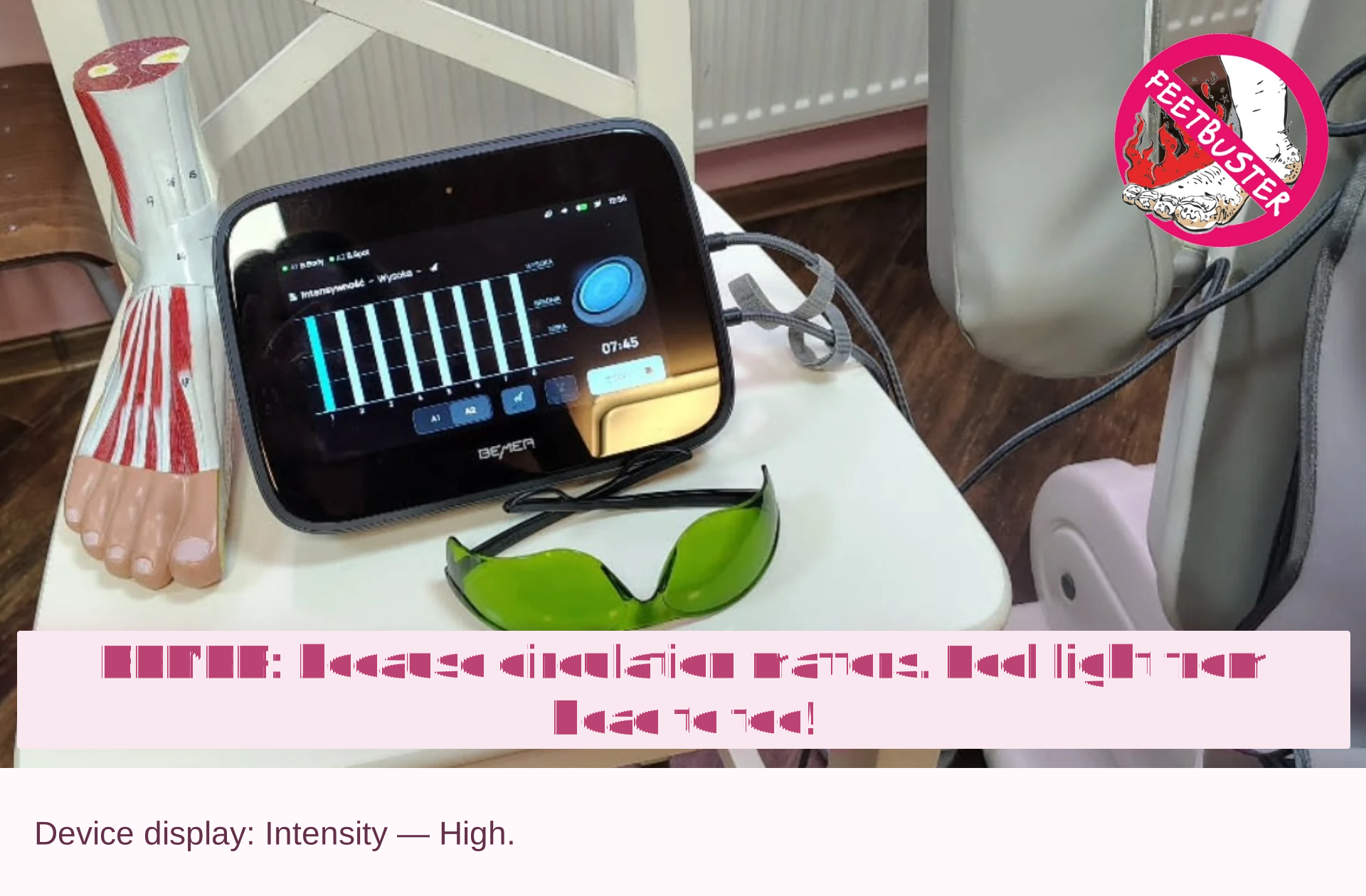
We use BEMER at the practice, a device that employs a pulsed electromagnetic field. Its use for pain treatment is being studied, but the current research review does not confirm an advantage over a placebo.
What do we ask before a session?
- What symptoms do you have, and have they already been diagnosed?
- Are there contraindications to using the device, such as an active implant?
- What treatment are you already receiving? A wound that heals poorly requires medical care.
An informed, holistic approach
We are showing you the BEMER® technology because the topic of microcirculation is really important for everyone who wants to take care of their long-term health. We treat the body as a whole – a healthy foot is the result of efficient circulation and well-nourished tissues.
We want to discuss how circulation affects skin condition and healing, and explain which symptoms require medical investigation.
Want to learn more? We have access to scientific publications on the impact of microcirculation stimulation on regenerative processes. If you are interested in this topic, let us know in the comment or ask during your visit to the practice!
More about BEMER sessions, research and contraindications.