
We look forward to summer all year: long days, warm weather and a relaxing break by the water. But Kraków’s reservoirs, thermal baths, hotel pools and seaside resorts have a downside too. Warmth, moisture and crowds of barefoot visitors provide a “five-star hotel” for fungal spores.
Fungal infections of the feet and nails are among the most common problems we see at the end of summer. How can you enjoy swimming and other activities by the water safely, and what should you do if your holiday ends with an itchy problem?
Here is a quick guide from the team at FEETBUSTER!
🩴 Step 1: Your holiday shield, or how to avoid infection?
Fungal infections do not come from nowhere. Small lapses in care on holiday often give fungi a way onto our skin. These simple precautions will help you enjoy your break with less worry:
- Flip flops anytime, anywhere: This is the first priority: wear them from the hotel changing room, through the showers and right up to the poolside. Hotel room carpets can also harbour pathogens, so avoid walking on them barefoot.
- The “dry toes” strategy: Fungi thrive in moisture. Dry your feet thoroughly with a towel every time you leave the water. Pay particular attention to the spaces between your toes — the combination of moisture and poor ventilation often makes this the starting point for an infection.
- Your own towel for a public sun lounger: Never lie down or rest your bare feet directly on plastic loungers at a pool or beach. Put your own towel underneath you and wash it at a high temperature when you get home.
- When you return: wash and dry your feet, change damp socks and dry your footwear. Do not use medicines or disinfectants just in case.
🛑 Step 2: It has happened… How can you recognise a fungal infection, and what should you NOT do?
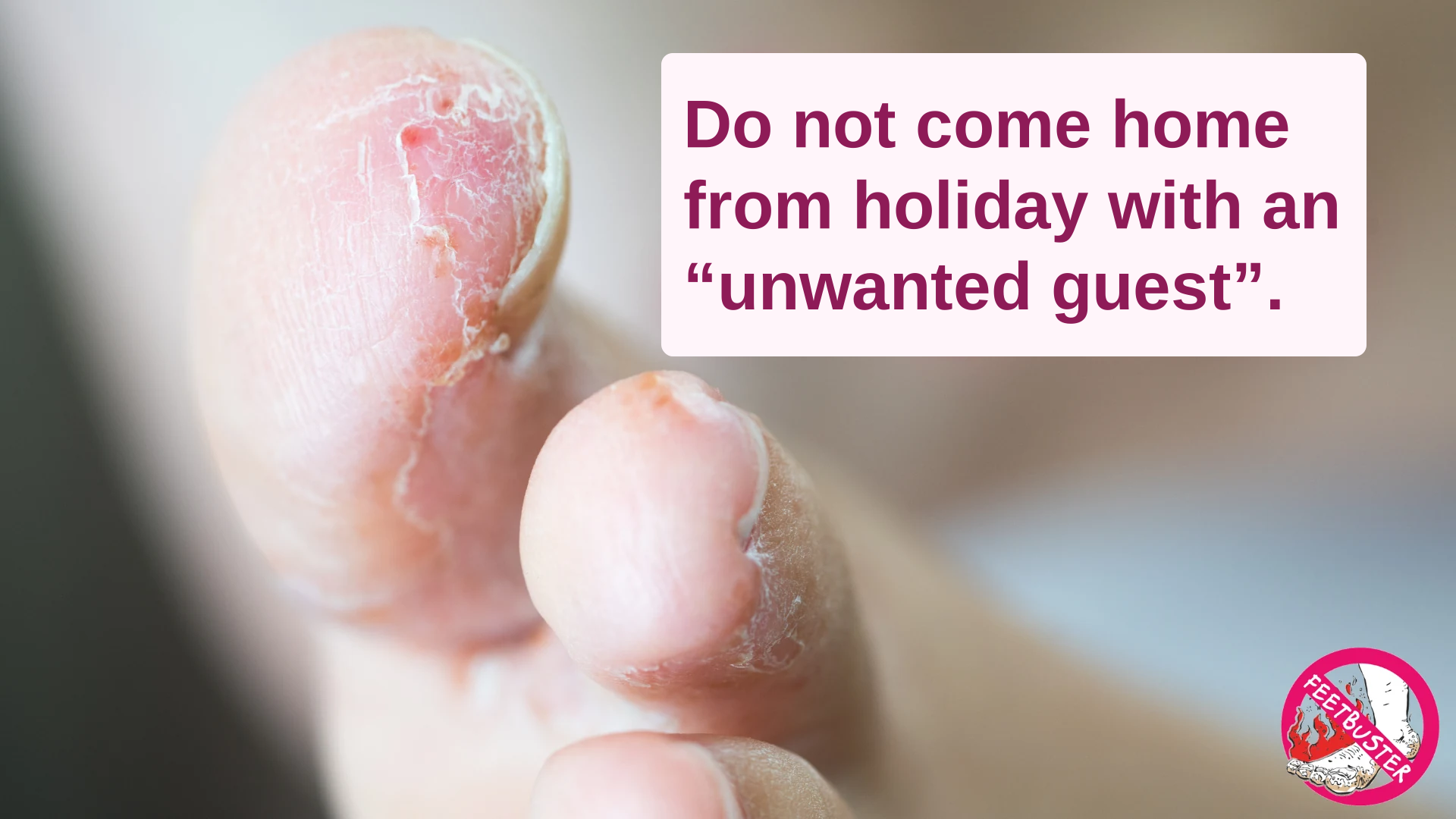
Have you returned from vacation and noticed that the skin between your toes is starting to peel, crack and become unbearably itchy? Or maybe the nail plate has lost its shine, has become dull, yellowish or is starting to crumble? These may be the first symptoms of a fungal infection.
Nail polish and gel polish conceal changes and make a nail harder to assess. The nail plate does not breathe — the problem is masking symptoms and possible additional damage during nail treatments. Not every change is a fungal infection; nail changes may require testing a sample.
👣 How do we address the problem at FEETBUSTER?
At the practice we assess the skin and nails and adapt foot care and nail preparation to the individual situation. Diagnosis of disease, decisions about medical procedures and drug treatment belong to an appropriately qualified healthcare professional. Suspected infection or a more serious injury requires medical consultation.
- Examination and diagnostics: To guide targeted treatment, we can take a sample for fungal testing. This identifies the organism involved.
- Nail care: The extent of care and the sensations involved depend on the condition of the skin and nails and individual sensitivity. We do not promise a pain-free procedure or the same result for everyone.
- Treatment and care: antifungal medicines are selected by a doctor or, for non-prescription products for fungal skin infections, a pharmacist. At the practice, we discuss nail care and hygiene for socks and footwear.
More information: PCR testing for fungal infections.
Editorial update: .