FEETBUSTER FOOT CARE PRACTICE · KRAKÓW
Cryosthetics cryotherapy
Precise, local freezing of skin lesions with nitrous oxide. At Feetbuster in Kraków, we begin by assessing the lesion and discussing previous treatment before choosing an approach.
What is cryotherapy?
Cryosthetics cryotherapy precisely freezes skin lesions using nitrous oxide (N₂O) under high pressure. It acts locally, without making an incision in the skin. The procedure itself usually takes a few minutes; the appointment also includes assessment of the lesion and discussion of aftercare.
The low temperature causes controlled tissue damage within the treated lesion. The skin then goes through a healing process. The absence of an incision does not mean that the skin will not react — redness, a blister or a scab may develop after freezing.
Freezing of viral warts — when do we consider it?
Cryotherapy is one of the methods used to treat viral warts. The choice of treatment depends on factors such as the location and size of the lesion, the condition of the skin and its response to previous treatments. Not every lesion that looks like a wart is one.
Before treatment, an assessment is needed to determine whether freezing is appropriate. Lesions of uncertain nature, lesions that bleed or those that rapidly change appearance should not be removed without clarifying their cause. A dermatology consultation may be needed. Read more about planning treatment on our page about viral warts on the feet.
Photo and video from the practice
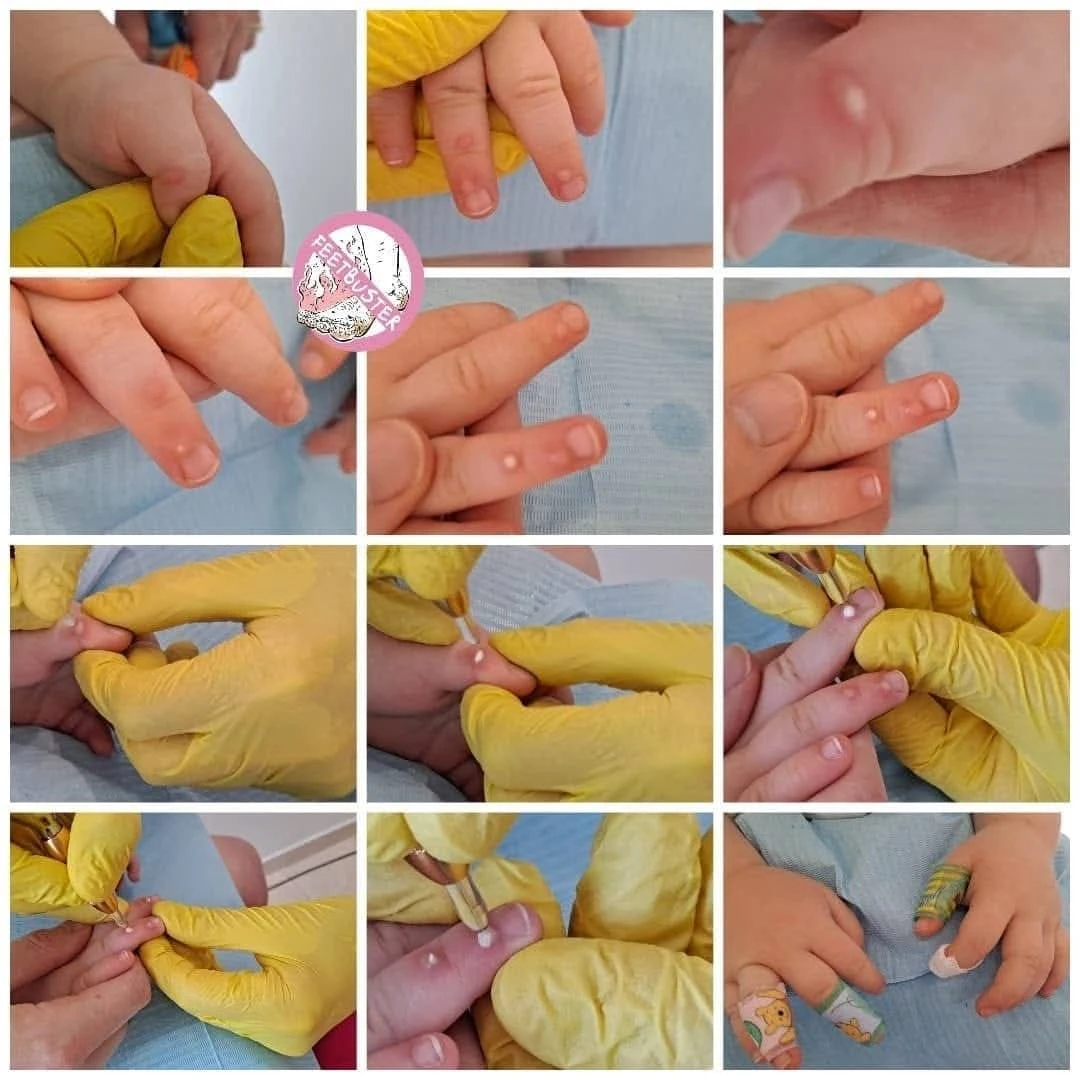
The video shows the child’s hands after the procedure has been completed. The course of treatment and sensations are individual.
What does the visit involve?
We first discuss how long the lesion has been present, previous treatment and any symptoms. Tell us about chronic conditions, changes in sensation or circulation, and unusual reactions to cold. We agree on the scope and cost before treatment.
After assessing the skin, cold is applied locally to the selected lesion. The settings and application time are tailored to the situation. You will receive aftercare and follow-up advice. For a child, we discuss the approach with their guardian and take the child’s tolerance of the procedure into account.
Does cryotherapy hurt and how many visits are needed?
During cryotherapy, you may feel a tingling, burning, or pain. Sensitivity depends on the individual, the location, and the scope of the procedure. Report any discomfort to the person performing the cryotherapy — we do not assume that the procedure will be painless for everyone.
One appointment is not always enough. Some warts require repeat treatment and lesions may recur. The number and spacing of appointments depend on the skin’s response; we do not promise a specific completion date in advance.
How to care for your skin after cryotherapy?
Follow the recommendations received in the clinic. Keep the treated area clean, protect it from friction, and do not scratch the scab. Do not puncture the blister yourself; agree on how to care for it with the clinic. Do not apply any preparations for warts without prior agreement.
Healing depends on the site and extent of freezing. Temporary changes in skin colour are possible and, less commonly, a scar. Increasing pain, worsening redness or pus require contact with a doctor. Lesions near a nail particularly require precision and prior assessment.
Cryotherapy in Kraków — price and booking
We welcome patients at the Feetbuster foot care practice, ul. Żmujdzka 49 in Kraków. Current treatment and follow-up prices are available in the cryotherapy price list. The cost is higher for widespread lesions; we agree on the price before treatment.
Before your appointment, do not cut out or pick at lesions. Bring information about products you have used and previous treatments. Check our booking and appointment change rules.
More about cryotherapy
General information about freezing, possible skin reactions and healing: British Association of Dermatologists and Primary Care Dermatology Society. These resources describe cryotherapy in general; Feetbuster uses the nitrous oxide described above.