
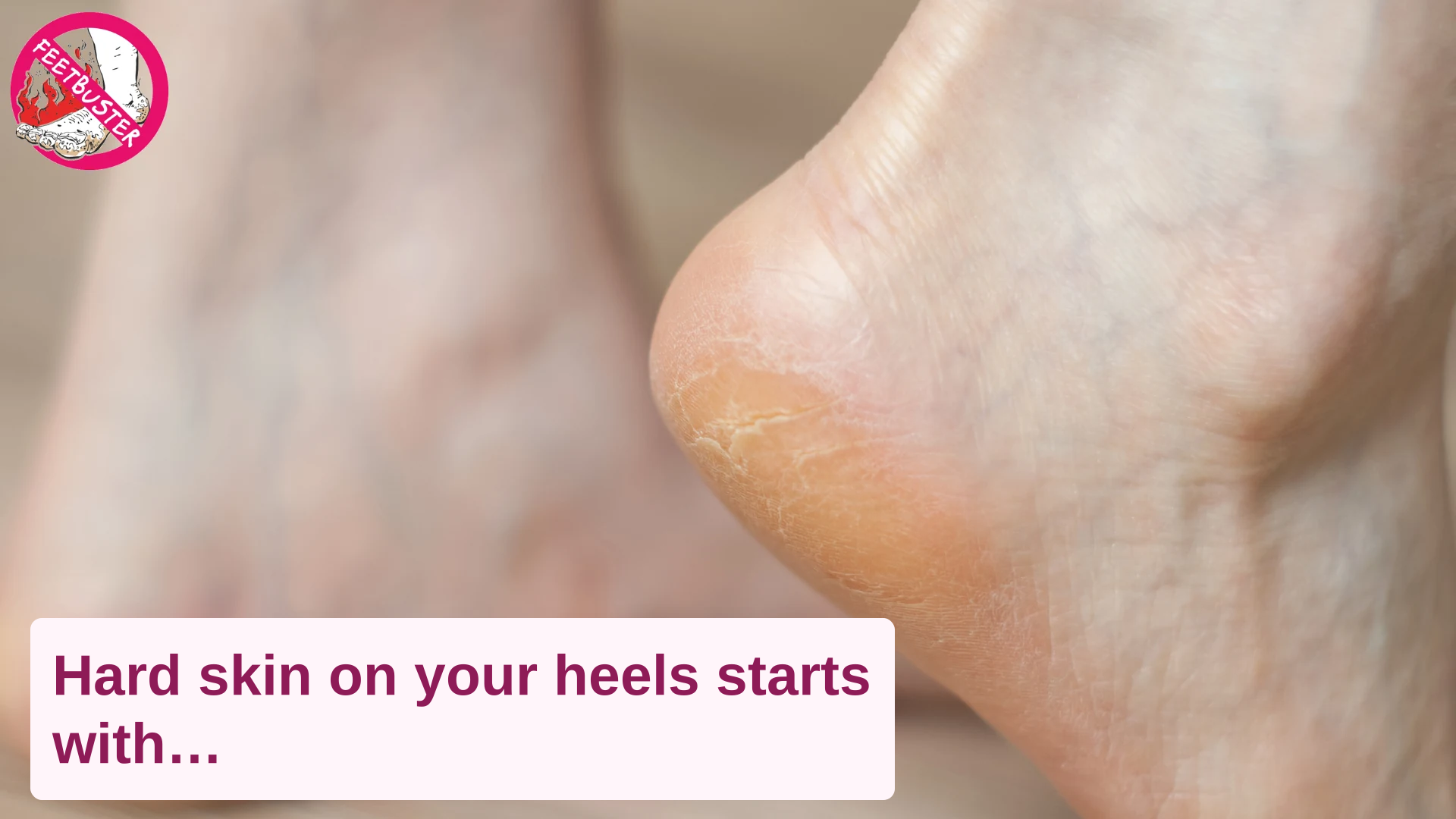
Dry, rough heels that eventually crack are a common problem. The first, most instinctive response is to reach for a deeply moisturising foot cream or lotion. When that does not help, people turn to foot files, pumice stones and exfoliating socks from the chemist.
Even with daily moisturising and intensive filing, hard skin often returns, thicker and more prone to cracking. Why? Physiologically, excessive skin thickening, or hyperkeratosis, is rarely caused solely by a lack of water in the epidermis. More often, it is an active defence mechanism of the body.
How does the skin on the heels work?
The skin on the soles differs from skin elsewhere on the body. It is much thicker, has a denser network of collagen fibres and contains no sebaceous glands, making it more prone to dryness.
Its main role is to protect deeper tissues from mechanical injury. When a point on the heel is repeatedly exposed to excessive pressure or friction, the epidermal cells, called keratinocytes, are stimulated to divide more quickly. This produces a hardened protective layer intended to shield the foot from damage.
The real causes of hard skin on heels
If moisturising does not help as expected, consider the factors that keep prompting the skin to defend itself:
1. Disturbed foot biomechanics and defective gait pattern
This is one of the most common and at the same time most underestimated causes. If the foot does not move naturally and freely, the body weight is not distributed evenly over its entire surface. The heel then becomes an extremely overloaded point. In response to the constant pressure with each step, the skin begins to build up rapidly.
2. Improper footwear design
Footwear has a key impact on how our foot contacts the ground. The following factors adversely affect the skin of the heels:
- Narrow toe boxes: they squeeze the toes and can create local pressure and change the way the foot meets the ground.
- Flip-flops and shoes without a stable hold: with each step in loose slip-on sandals, the sole slaps against the heel. This lack of stability prompts the skin to keep thickening defensively.
- Wrong size: causes constant shifts and unnecessary friction of the material against the edges of the foot.
3. Mistakes in home care (the so-called yo-yo effect)
Filing too deeply or too often can irritate the skin, cause cuts and damage its protective barrier. If pressure or friction continues, hardened skin can return.
The same applies to the so-called exfoliating socks based on strong acids – uncontrolled exfoliation may lead to chemical burns and disruption of the skin’s natural protective barrier.
4. Systemic and metabolic factors
The condition of the skin on the heels can reflect overall health. Factors that may contribute to excessive thickening and cracking include:
- Hypothyroidism (contributing to marked skin dryness throughout the body),
- Diabetes and circulatory disorders (making it difficult to properly nourish tissues),
- Skin conditions such as psoriasis or eczema.
- Excess body weight (increasing physical pressure on the heels).
How to properly care for your heels?
The basis for effective action is to move away from the superficial fight against the effects and towards understanding the cause.
- Change your approach to exfoliation: Instead of aggressive filing, choose gentle, fine-grained scrubs or enzyme exfoliants.
- Choose products with suitable ingredients: For daily care of dry skin, suitable creams include those containing urea (with a moisturising effect at concentrations of 10–15%), ceramides and natural butters. Higher urea concentrations, above 25%, have an exfoliating effect and should be used carefully.
- Give your feet freedom: Choose flexible footwear that gives your toes room to move naturally and supports the foot’s normal rolling movement.
- Pay attention to how you walk: if hardened skin keeps returning in one place, examine your footwear and how your foot bears weight.
Hard skin on the heels is more than a cosmetic issue: it is a signal from the body. Understanding what triggers this defence mechanism is the first step towards keeping the skin healthy and smooth.