
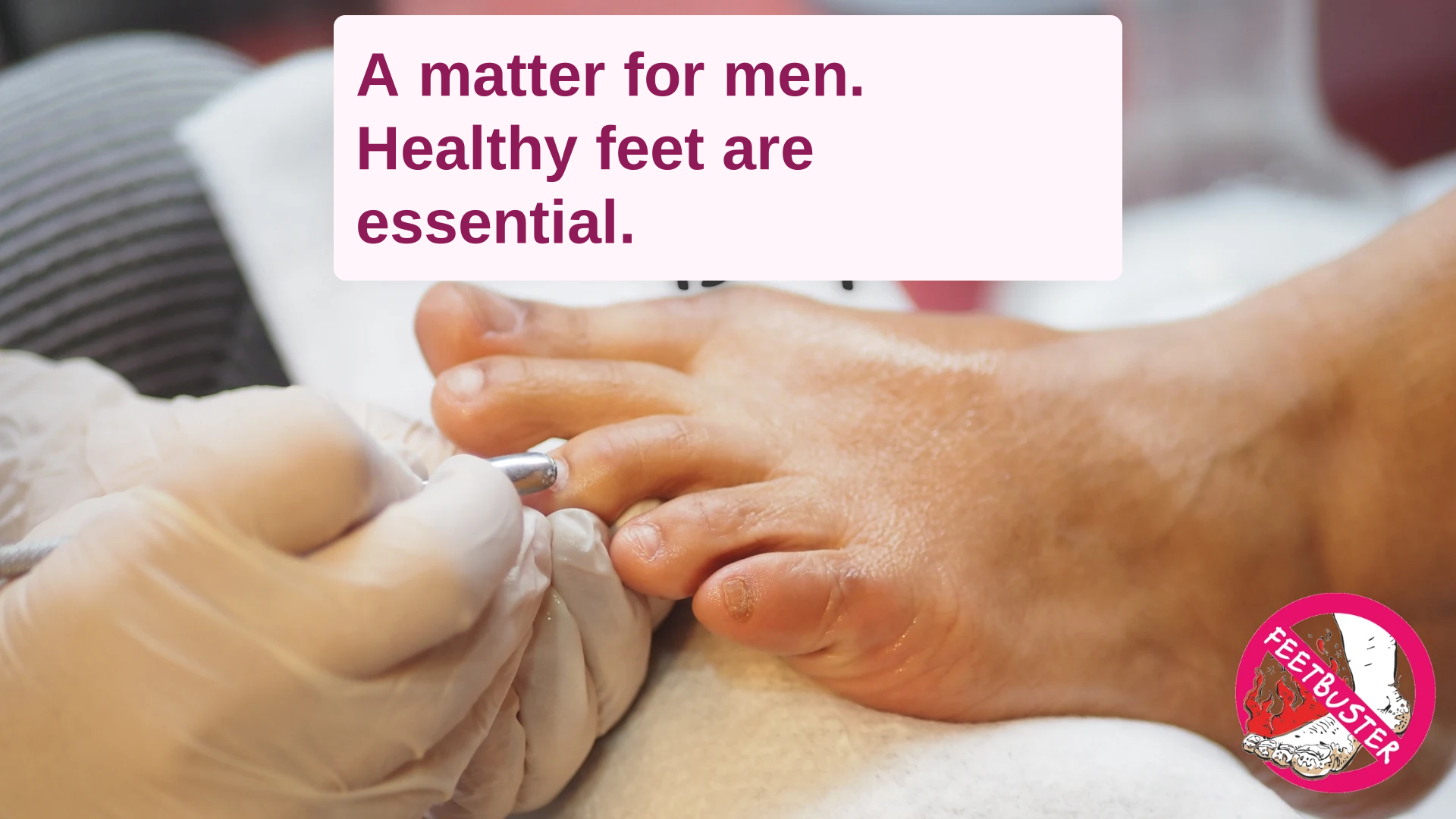
Many men still think a visit to a foot specialist is much like a trip to a spa: masks, scrubs and nail polish. The result? They often come to our practice only when the pain is unbearable and every step feels like walking on hot coals.
It is time to dispel that myth. Podology is not a beauty treatment. It is about the mechanics of your body.
Your feet are your drive (and you have no spare parts)
Imagine your car has a bent wheel rim or a bulge in a tyre. Would you ignore it and hope it would sort itself out as you drove? Of course not: you would take it to a garage, knowing that the suspension and steering could soon fail.
The same applies to your feet. If a toe hurts, you unconsciously change the way you place your foot. This puts strain on the ankle, knee, hip and eventually the spine. One small corn left untreated can cause serious back pain after a few months. Is that a risk worth taking?
Common foot “faults” in men
At FEETBUSTER, we regularly encounter problems that are commonplace for men:
- Ingrown toenails: Often the result of attempts at “DIY repairs” in the bathroom using excessively sharp tools.
- Calluses and corns: They form where work or sports footwear presses too hard against the foot. This is not “manly tough skin”: these are painful lesions that need to be removed.
- Excessive sweating and infections: Long hours of work in heavy footwear are ideal conditions for the development of bacteria and fungi.
- Cracked heels: This is more than a cosmetic problem: deep cracks provide a route for infection.
What happens during an appointment?
Many men put off an appointment because they fear pain or being judged. That is not how we work. At FEETBUSTER, you can expect professional care, sterile instruments and a straightforward approach.
- Assessment: We assess your feet and look for the cause of the problem, such as unsuitable footwear, poor nail-trimming technique or a postural problem.
- Treatment: we treat the affected areas using sterile instruments and select pressure relief for painful spots.
- Recommendations: We explain briefly what to do to keep the problem from returning. No complicated routines, just practical steps.